FRESH IDEAS. DEEPER ROOTS.A LITTLE SPACE FOR YOUR NEXT CHAPTER ↗
Book Radish
Cover of WebGL Compute (Paperback) FROM THE BOOK CATALOGUE

GPU Computing

WebGL Compute (Paperback)

By Kenwright

A hands‑on guide to using WebGL for general‑purpose GPU computation in the browser.

WHAT THE PUBLISHER HIGHLIGHTS

  • Learn how to use WebGL for non‑graphical GPU computation.
  • Understand how GLSL ES shaders can accelerate parallel workloads.
  • Explore practical examples of browser‑based GPGPU techniques.

Opens www.amazon.com. Check the retailer for current prices, formats, delivery, and availability.

Catalogue reference: 8fc927ef60c9f5a8

INSIDE THE BOOK

About this book

WebGL Compute explores how to repurpose WebGL’s graphics‑focused pipeline for high‑performance computation. By leveraging GLSL ES shaders, readers learn how to run massively parallel workloads directly on the GPU using nothing more than a web browser. The book walks through practical techniques, minimal examples, and creative strategies for performing non‑graphical tasks such as simulation, data processing, and algorithm acceleration. Ideal for developers, researchers, and enthusiasts who want to push WebGL beyond rendering and tap into the hidden compute power available on virtually every device.

From the publisher’s description

  • Learn how to use WebGL for non‑graphical GPU computation.
  • Understand how GLSL ES shaders can accelerate parallel workloads.
  • Explore practical examples of browser‑based GPGPU techniques.
  • Discover creative ways to repurpose WebGL beyond rendering.

Explore the topics

ANOTHER PERSPECTIVE

Readers, in their own words

Explore reviews
Reader review4

Good, but not for absolute beginners

A useful guide. The examples assume a particular environment, but that is fixable.

A colleague recommended this and I can see why. It does something that few technical books manage: it respects the reader's time. Some of the material is available elsewhere, but rarely presented this clearly. The index and cross-references are surprisingly good, which matters for a book I will come back to. The author is unusually honest about where the simplifications break down, which I appreciated. A good addition to a technical library, as long as you know what you are buying.

Ewan CookResearch scientist · Paris, FR
WebGL Compute
Reader review4

An enjoyable and informative read

Almost excellent. A second edition could easily push it to five stars.

A colleague recommended this and I can see why. It does something that few technical books manage: it respects the reader's time. The balance between theory and practice is well judged; neither side dominates. The early chapters move quickly through material I already knew, but the later sections were genuinely new to me. Solid, and I would buy another book from this author without hesitation.

Greta StewartUniversity lecturer · Paris, FR
WebGL Compute
Reader review4

Well worth picking up

Strong content, uneven pacing. I would still recommend it.

I have been working with gpu computing for a few years now and I still found plenty here that was new to me. The author is unusually honest about where the simplifications break down, which I appreciated. The examples are small enough to type out and experiment with, which is exactly what I want from a book like this. The writing is direct and does not waste space on filler, which I value in a technical book. Worth picking up if you already have the basics. Set realistic expectations and you will get a lot out of it.

Rosa BaileyCompiler engineer · Edinburgh, UK
WebGL Compute

BEYOND THE BOOKSHELF

News & ideas

More to explore
www.quantamagazine.org

How Do Fungi Keep the Planet Healthy?

Evolutionary biologist Toby Kiers explains how fungal networks in soil trade nutrients with plants, help keep carbon underground, and strike bargains without having a brain. The post How Do Fungi Keep the Planet Healthy? first ap…

Read at www.quantamagazine.org

THE BOOKS

Plant something on your shelf

View all books
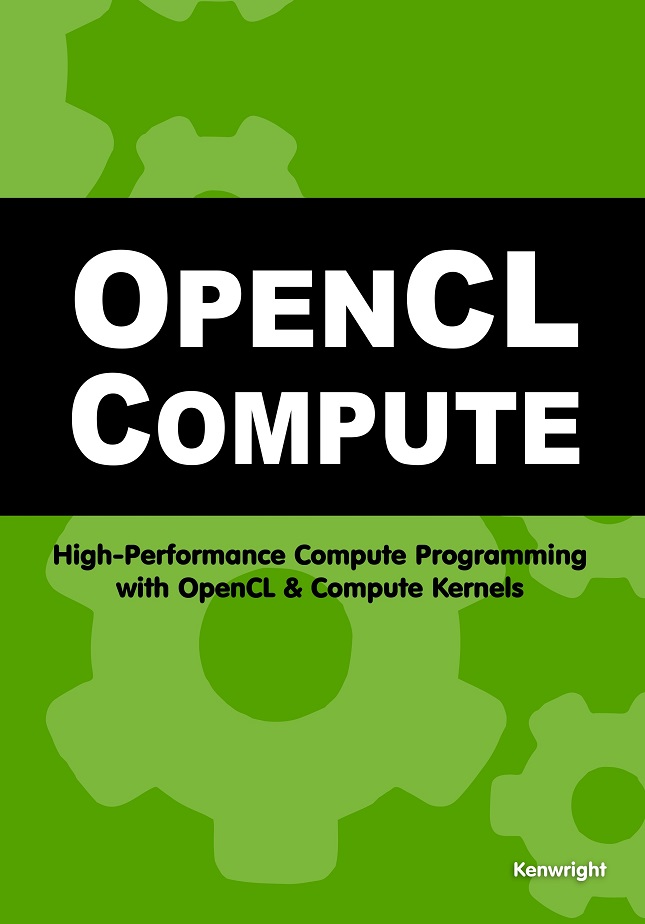
Cover of OpenCL Compute (Paperback)
Parallel Programming

OpenCL Compute

A practical guide to mastering OpenCL for cross‑platform GPU and CPU compute programming.

Learn how to write OpenCL kernels for GPUs and CPUs.

Grow a question. Pick a good book.

Look for the foundations you need before moving to advanced material.

Explore the catalogue